How to Choose Safe Chew Toys for Your Bird by Size and Species
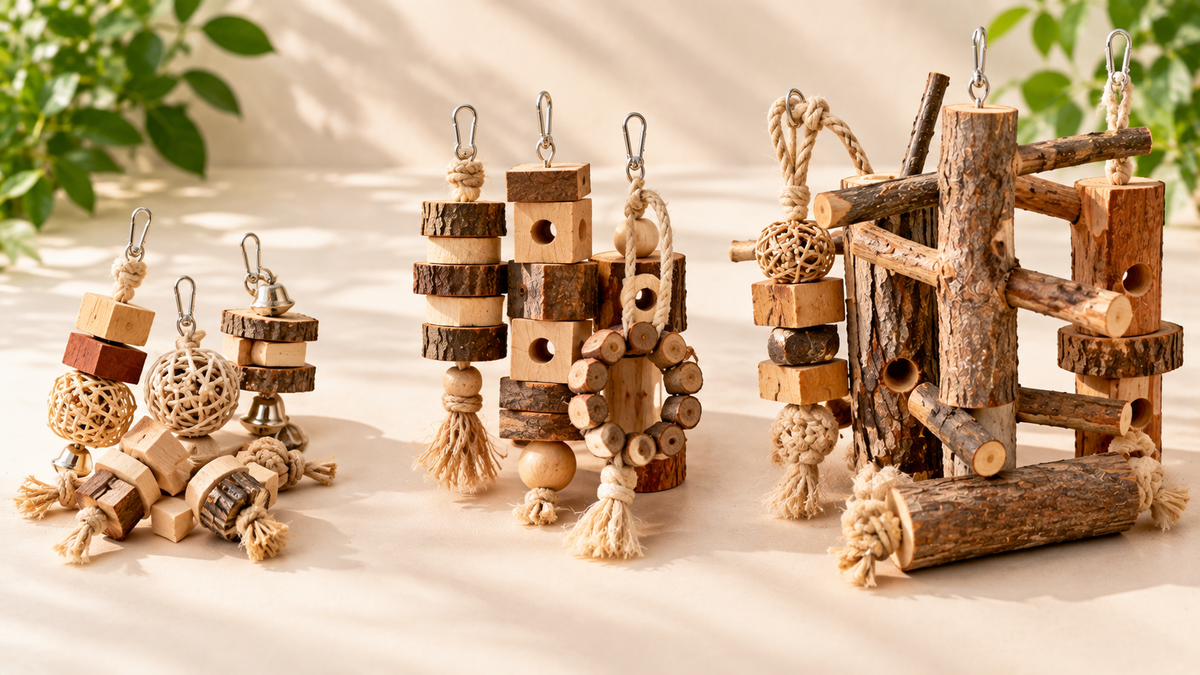
Chewing is a natural behaviour for parrots and many other birds. The right chew toy keeps your bird busy and active. This guide explains how to choose safe chew toys for birds by size and species.

Why do birds chew?
Chewing lets birds explore, shred and play. It also keeps them mentally busy, which is helpful when you are away from home.
Chew toys for small birds
Budgies, lovebirds and finches do best with small, light toys that they can handle easily. Look at our toys for small birds, such as small swings, wooden platforms, mini perch sets and small chewing toys.
Chew toys for medium birds
Cockatiels, conures and senegals enjoy medium-sized wooden toys, hanging toys, ladders and natural luffa toys. CONGO also offers edible coloured chewing toys for these birds, made with non-toxic materials as described on each product page.
Chew toys for large birds
African greys, macaws and cockatoos have strong beaks and need larger, sturdier toys, such as big chew toys, large wooden ladders and strong perches. Choose toys labelled for large birds.

Rotate your bird's toys
Birds can get bored with the same toy. Keep a few toys in the cage and swap them every week or two. This keeps playtime interesting.
Safety checks
- Choose toys made for your bird's size.
- Avoid toys with loose parts, long loops or sharp metal.
- Check toys often and remove any that are broken.
Frequently asked questions
How many toys should a cage have?
A few well-chosen toys are better than a crowded cage. Leave room for your bird to move.
What if my bird ignores a new toy?
Introduce it slowly and place it outside the cage first. Some birds take a few days to get used to new items.
Shop now: CONGO bird toys and cage accessories.